
Ants and leadership

I’ve been battling the ants. We’ve discovered that we have ants in our new Lakehouse, which I’d rather not have inside – totally fine outside, but not in my living space. I’ve done some research and discovered that the exterior caulking between the roofline and the walls has completely deteriorated. It seems circa 1970 when the house was built and it’s cracked and completely fallen off. I image the cracks as grand doors with a red carpet and neon sign that says, “Ants, enter here for food, water and shelter.”
My project this summer has become recaulking the house and experimenting with other ant deterrents, like diatomaceous earth and a water vinegar mixture to disrupt their pheromone paths. My husband suggested we also get rid of the ant nests on the lawn further away from the property, but I’m not sure that’s necessary.
As I stand on my ladder with a caulking tube in hand, my mind inevitably wanders, and I think about work and leaders. Bear with me… an analogy emerged.
Time is precious, and people covet it and their workspaces so they can be effective and do their best work. Leaders, too, have heads down work they want to get done, and it can feel like an intrusion when employees ask questions, look for advice and interrupt their day with an idea.
In my analogy, these interruptions could feel like ants coming into one’s personal space. We put measures in place to keep them out. Leaders too, consciously or not arrange their work to discourage interruptions – close their door, block off their calendar, present an air of busyness so as to not be interrupted. And yet, this is the work of leaders – to coach, guide and manage employees. Just like mother nature will surely win over my ant efforts, employees will always look to their leader for guidance and advice.
Maybe it’s not about eradicating the ants or getting rid of the interruptions, but about managing them. It’s about leaving the ant hill outside on the lawn and encouraging them to live there, not in my house. It’s about setting up boundaries and putting parameters in place to manage your work. For leaders it means helping employees to be successful in their domain – creating an ant hill where they can be successful in their own space. This means coaching and guiding them so they can work more independently and leaders have fewer interruptions.
In my book, Into the Hands of Leaders: Employee Growth through Learning, I tell the story of Dennis, who was promoted to lead a team, struggled, and realized he didn’t enjoy it. After a year, Dennis demoted himself to a position where he didn’t have direct reports, and that was a better fit with his skills and preferences.
To lead is to have interruptions to your workspace and your time. To lead successfully requires boundaries. Leaders coach and guide employees so they can be successful in their domain, and leaders can focus on their work – leading.
The power of belonging
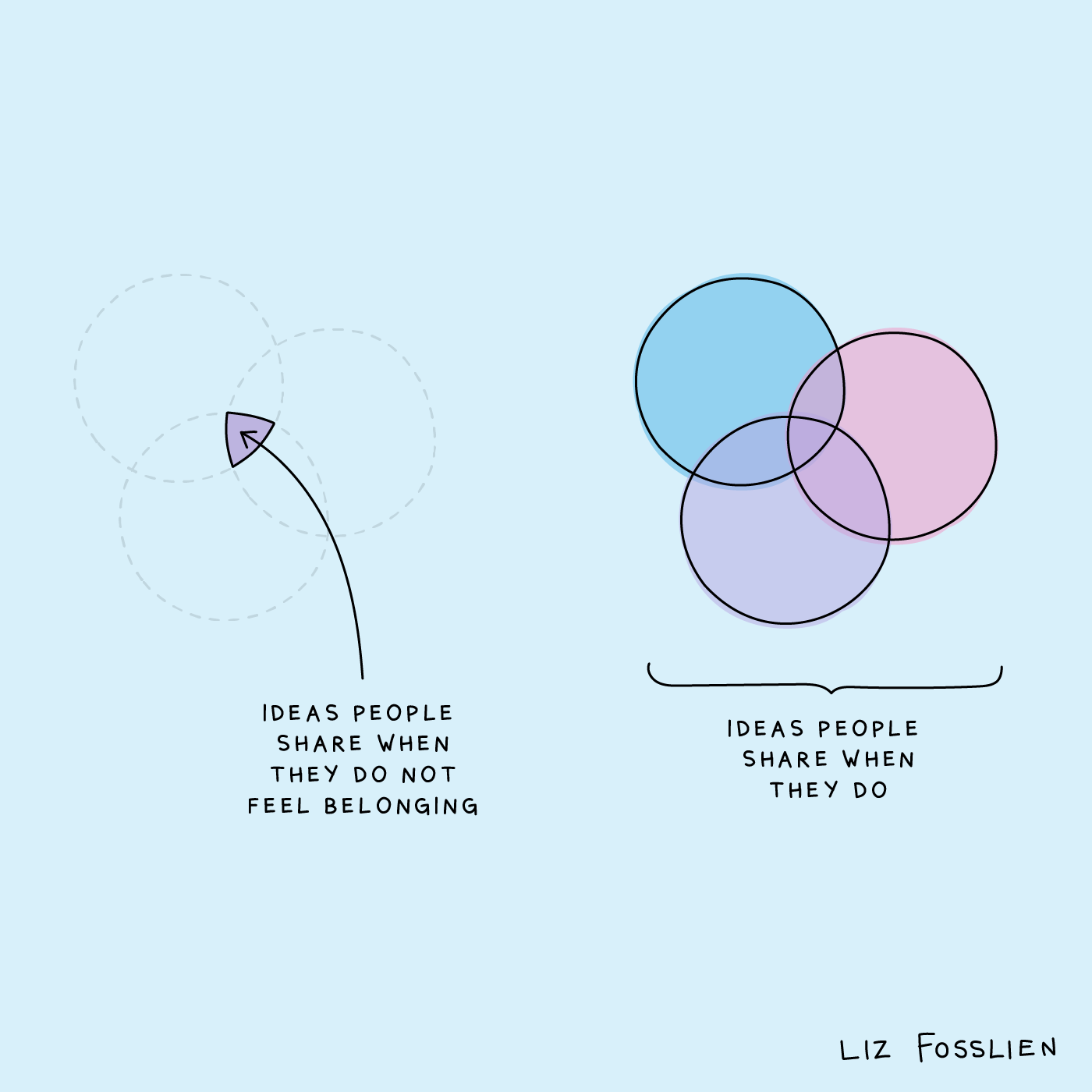
I love Liz Fosslien’s illustrations. She titled this one, The Power of Belonging, and it beautifully underscores the importance of belonging for creativity and innovation to emerge.
When I work with leaders, I explain the levels of psychological safety1 and their role in creating a team culture where people feel a sense of belonging, can learn, and grow.
- Included – Safe to feel included as yourself and accepted as you are without discrimination of any sort.
- Learning – Safe to learn and grow through feedback, ideas, asking questions and making mistakes.
- Contributing – Safe to contribute to the group through your skills, abilities, and ideas without any penalization.
- Challenging – Safe to challenge ideas, the status quo and even leaders, when there’s room to improve.
Leaders and organizations communicate the importance of innovation and adaptability. Many have these listed as organizational values. And yet, I often see a disconnect between what the organization espouses and what happens in individual teams. A colleague, Robert2, has left his organization of 16 years for a new opportunity. While the organization has “engaging” and “inspiring” as two of its values, Robert left because he didn’t feel like he belonged. New leadership changed the dynamics and culture of his broader team. He no longer felt safe and supported and stopped sharing his ideas. He was no longer engaged or inspired.
People leave because of their teams and their managers. They rarely leave because of the broader organization. As a leader, what can you do to nurture a sense of belonging?
Here are some ideas from leaders I’ve worked with.
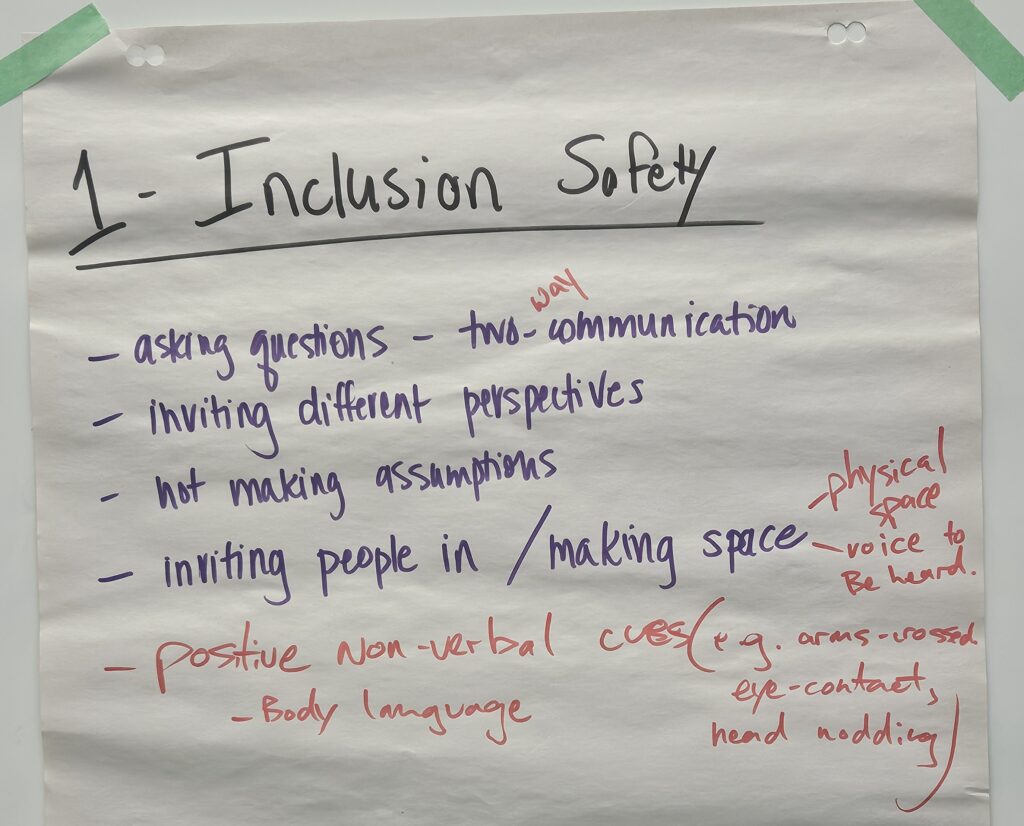
How do you nurture a team culture where employees feel like they belong and are included?
1 The 4 Stages of Psychological Safety: Defining the Path to Inclusion and Innovation by Timothy R. Clark (2020)
2 Name change to maintain anonymity.
Continuous learning and high-performing teams
On the surface, there’s a paradox – high-performing teams consistently achieve their objectives. High-performing teams also have a foundation of continuous learning. Achieving objectives is often equated with being task-focused, efficient and effective. Learning takes time, is fraught with mistakes and is initially less efficient. There’s pressure everywhere to achieve results, which leaves little time for learning, and yet, high-performing teams balance both.
Executive leaders set the tone for how teams in their organization balance these seemingly competing priorities. When leaders foster a culture where learning and performance go hand-in-hand, employees are more engaged, adaptable, and capable of delivering innovative solutions. This leads to higher performance, even though learning takes time and can lead to mistakes.
High-performing teams work in an environment where learning is valued. Whether it’s through collaboration, feedback, or coaching, every interaction is an opportunity for growth. When learning is embedded in a team’s culture, it leads to improved team performance, higher employee engagement, and better organizational outcomes overall.
How are you supporting continuous learning in your organization?
By making learning and growth a priority, you’re building capability for today and capacity for tomorrow.
In case you missed it
I’ve shared some additional posts online. Here they are, in case you missed them.
- Lead, Learn, Grow conversation card: What have you learned? (video link)
- Lead, Learn, Grow conversation cards: Who challenges you? (video link)

