
September has been a month of transitions for my family as we moved into a new home. As I’ve unpacked boxes, adjusted routines and searched for a sense of normalcy, I’ve been reminded that growth doesn’t always look like progress.
Sometimes we’re focused on getting things done. Other times we’re navigating the uncertain space between where we’ve been and where we’re headed. Both require something different from us. So, this month, I’m a bit more personal and reflecting on the difference between doing and being, and the importance of giving ourselves grace during times of transition.
Doing or Being

If you’ve been receiving my newsletter for a while, you may have noticed I’ve been going through a significant personal transition. We’ve moved from our family home of 20 years to our dream home – a quiet spot on a lake. We moved in September amidst a bit of lingering construction but are settling in. People ask: Are you unpacked – No. Does it feel like home – no. When will your construction be finished – hopefully end of the month. Are you settled – no. Do you miss your old home – sometimes.
I realized the other night, falling asleep, that we’re so busy trying to finish the construction, unpack boxes and find homes for spices, towels and camping gear, that we’re busy ‘doing’. It doesn’t feel like home because it feels too much like a work in progress. I think we need to spend some time ‘being’ before it will feel like home. We need to establish new rituals – kayak paddles on the lake in the morning, blocks of time to work in our new offices, planned trips ‘into town’. Then it might start to feel more like home.
Leaders often tell me about their struggles to balance conflicting priorities, do more with less and meet current demands while finding time to think and plan long term. Getting caught up in day-to-day work is a lot like ‘doing’. It’s heads-down, putting out fires and responding to what’s in front of you. It’s tempting to feel like this is productive work. And, for those of you who love lists like I do, it feels so gratifying to cross off lots of little things and have a sense of accomplishment. But as leaders, this isn’t the work we should be focusing on. We need to create space for ‘being’ – for pausing and cultivating a team culture where team members can be curious and learn new skills, challenge outdated processes and work through healthy conflict. When teams feel like a home, members are more committed and do better work. Research consistently shows that psychologically safe teams perform better. In my latest book, Into the Hands of Leaders: Employee Growth through Learning, I reference findings that psychological safety helps employees speak up, share ideas, ask questions, and focus on solving problems rather than protecting themselves. Teams with higher psychological safety are more innovative, more engaged, and better able to navigate complexity and change.
I don’t want to present an unrealistic scenario. I know there are times when you just gotta get the work done – kind of like getting through unpacking boxes. But it can be a slippery slope we start on and then continue.
Where are you overly focused on the immediate tasks at hand and, in doing so, what important work might you be neglecting?
Give Grace
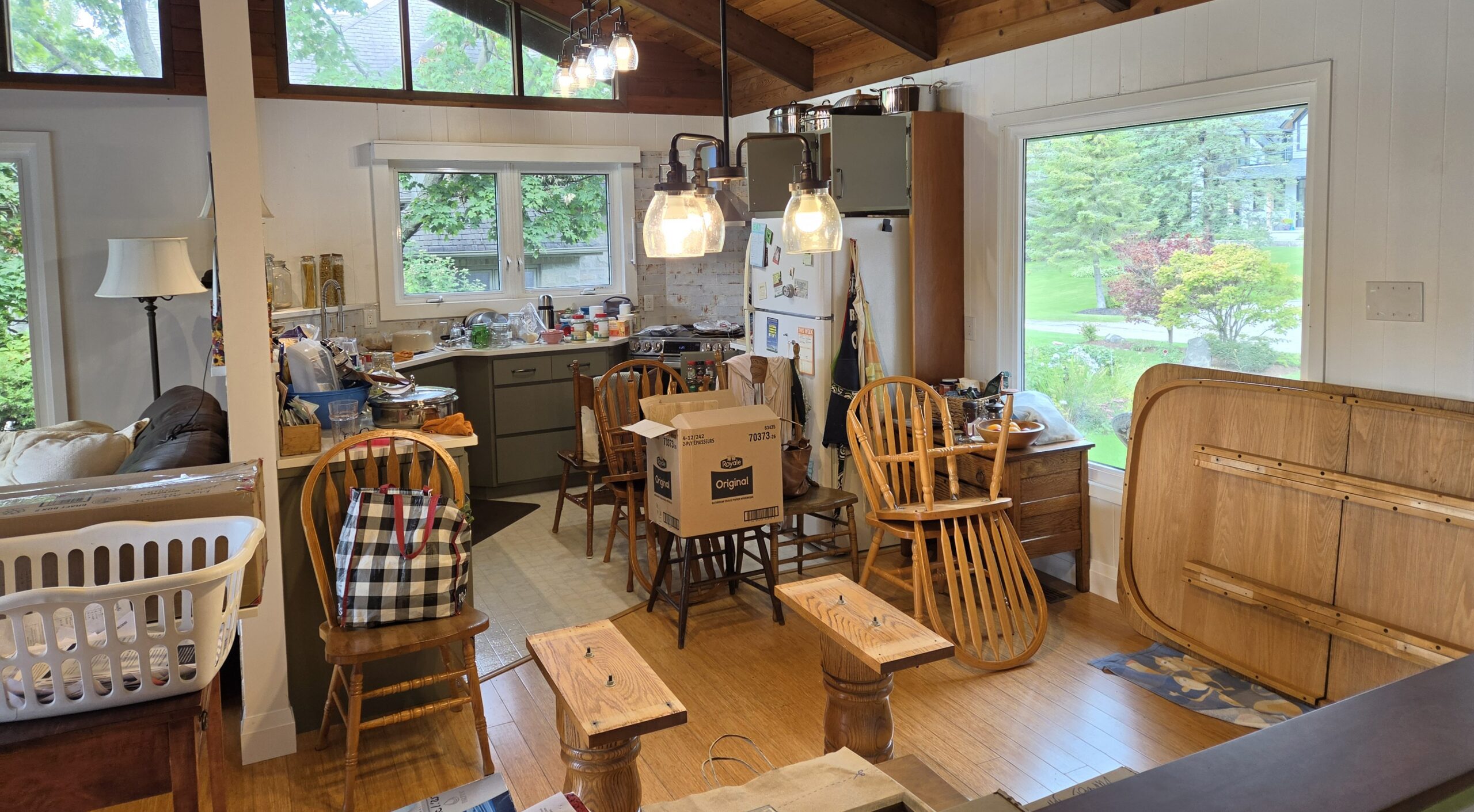
For those of you who have moved recently, you know it’s a significant undertaking. We took a week off to finish packing our previous house, move and start unpacking. The week that followed was back to work and back to school for my daughter. As we struggled to orient ourselves in our new home, it felt like we had bursts of work and then periods of aimlessness – wandering around. It took a while to figure out where to work, where to find the box with our papers and notes, and how to set up our workspaces. Initially, I had my desk and computer facing two lovely windows. I quickly realized that as the sun rose, I got blinded from about 10:30 to 1:30. I’m now on office layout #2.
I share this not because I think you’re interested in the minutiae of my move, but because I’ve been thinking about transitions and the difference between ‘moved in’ and ‘settled’.
I think we need to give ourselves grace in times of transition. Whether it’s a physical move like the one I’ve described, something personal or a change at work, transition takes time and energy. Years ago, I read Transitions: Making Sense of Life’s Changes by William Bridges. I’ve re-read it a few times and often refer to it. It’s definitely a book that survived the purge with moving! Bridges’ middle phase or neutral zone, is the time between an ending and a new beginning, where uncertainty, experimentation, and gradual adjustment replace clarity and routine. I like to call it the ‘messy middle’. It’s a time that feels stagnant, yet underneath, I’ve found there’s usually tremendous growth and change. This is the time when we need to give ourselves and others grace. It may seem like there’s little visible movement, but this sets the stage for new beginnings about to emerge. Our move took only a day, but the process of adapting takes much longer. We’re mostly past the chaos of boxes and finding homes for things, yet we’re not quite living comfortably in new routines and rhythms that will make this house feel like home.
As leaders, we often hold ourselves and others to unrealistic expectations during these transitions. We assume that because a project has launched, a restructuring has been announced, or a new role has begun, people should quickly return to full productivity. In reality, there is usually a period of reorientation. People are learning, adjusting, experimenting, and figuring out where everything belongs.
The challenge is that this stage can feel inefficient. Progress is harder to measure. Energy comes in bursts and many things take longer than they should. Yet this is often where the real work of change happens.
Maybe that’s why one of the most valuable things we can offer ourselves and our teams during times of transition is grace and the understanding that adapting takes time. Even positive change can be disruptive.
Where in your work or life are you expecting yourself to be “settled” when you’re actually still in the middle of transition?
In case you missed it
I’ve shared some additional posts online. Here they are, in case you missed them.
- Neurodiversity and Innovation Staffing (video link)
- Building Leaders for the Future (post link)
- Speaking on work and AI (post link)
- Different Minds at Work: Leading with Awareness and Empathy (post link)

