
The Quiet Strength of Consistency

Have you ever had a moment, an experience or a conversation that shifts a long-held assumption you’ve had? I had one recently. My daughter has had a part-time job at a bakery for two years and has really enjoyed it. Recently I picked her up, and she broke down in tears as she climbed into the car. It was an extra shift she had picked up, so the routines and tasks were different than what she does on her regular days. It was also a Friday, which is especially stressful because they’re getting ready for the busy weekend. We’ve recently learned that my daughter is autistic, and we’ve been learning about how that shapes her experience in society. She excels with structure and repeatable tasks.
Later that weekend, my husband and I went out for breakfast and were talking about my daughter’s challenging Friday shift. I imagined the type of job she would excel in as an adult and remembered a project I completed years ago. I worked with a large investment company to design training resources for their back-end administrative processes. I remember one woman who created new accounts in their proprietary software. She had done this for years, and the company had never documented how she did this. If something happened to this woman, her knowledge would be lost. So my team sat with her to watch her complete the very detailed steps in the process and created step-by-step job aids. I remember wondering how this woman could be content doing this same job for so many years.
In my conversation at breakfast, I connected these two experiences and realized a value and assumption I’ve held. As a lifelong learner, I’ve always valued learning new things, having new experiences and pushing myself to grow in new directions. I think it’s partly why being a consultant works so well for me. When I work with clients, I get to learn about their business and their industry. It feeds my curiosity. When I work with leaders, this bias towards curiosity and learning influences how I coach and guide them. My assumption is that employees want to learn and grow. Leaders should provide ‘stretch assignments’, secondments, and new job responsibilities to help their team members develop new skills and feed their curiosity.
My daughter and the woman at the investment company are perhaps wired differently. Maybe they don’t need to, or want to, learn and grow in the same way I do and as I counsel leaders. Maybe having too many new tasks or being temporarily assigned to a new job is the opposite of what they need. In these situations, it’s harder for them to shine. My daughter’s superpower is creating and following routines. In a future role, perhaps she would excel at opening accounts.
Leaders have their high performers – their go-to superstars on their teams. They also have the consistent workers who plug along, do great work and often remain in the shadows. What each person needs, what they’re curious about, and how they may or may not want to learn and develop will be different.
How can you learn about your quiet, steady workers and what they need to be successful?
Leading Without a Clear Path
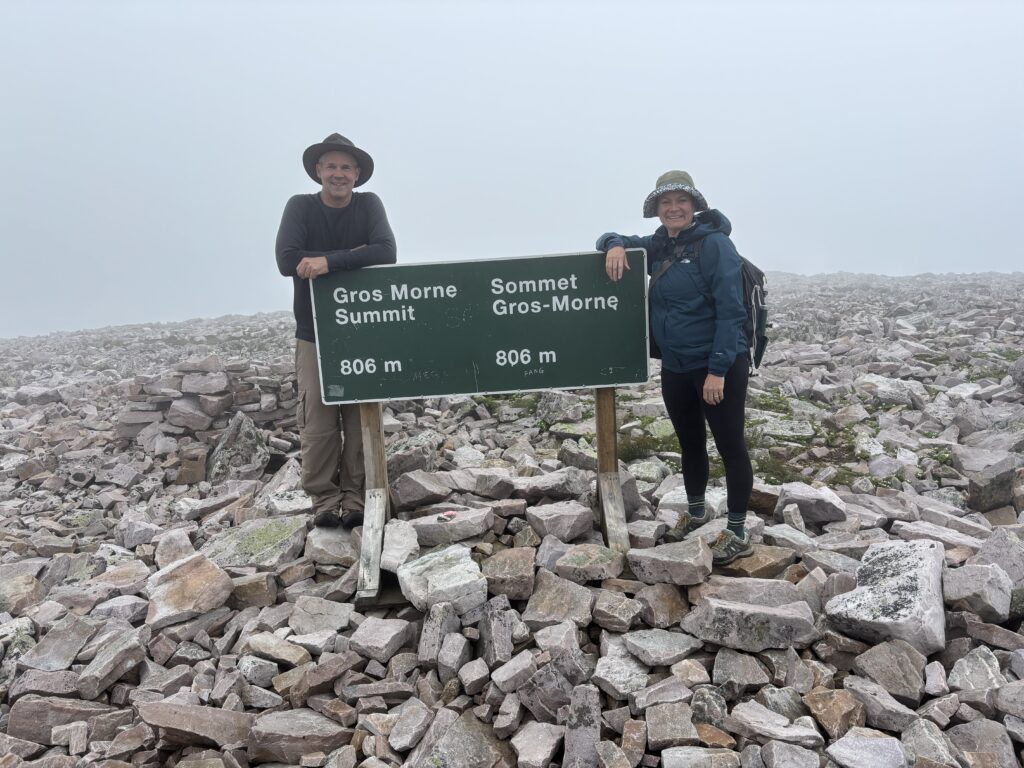
I was on vacation earlier this month – a 10-day trip to Newfoundland with friends. The high point of our trip was summiting Gros Morne. It is described as “a strenuous, full-day physical challenge rated as difficult, spanning 17 km (10.5 miles) with an elevation gain of 800 meters. It is recommended only for experienced, physically fit hikers and takes about 6 to 8.5 hours to complete.” We were not ‘experienced, physically fit hikers’ and it took us 11 hours – even with our training in the months beforehand!

This was our route to ascend.
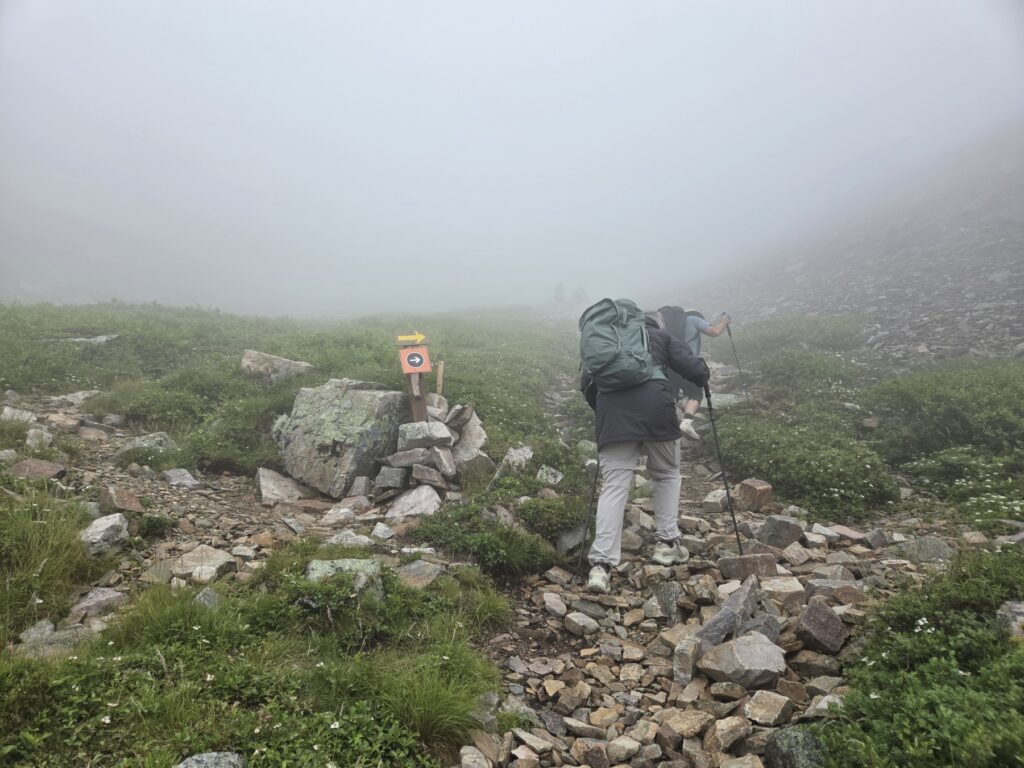
But when we started, it was foggy, and we couldn’t see the top. Halfway up was shrouded in cloud, and we debated whether we should continue. We didn’t want to get to the top and get lost because we couldn’t see the trail markers.

We decided that our group of six provided ‘safety in numbers’ and we got enough cell coverage that GPS could track our movements. We hoped it would provide the way forward even if the trail markers were clouded in fog.
At the 650m mark, the fog cleared a bit, and we saw a trail marker! Our decision to continue was validated, and we were filled with confidence and newfound energy.
We all agreed that we were proud of our accomplishment. We were all incredibly sore and terribly tired. And we all agreed that we would never do it again!
I finished that climb and had very sore muscles and such a sense of accomplishment. I also clearly remember pausing on the side of a mountain, unable to see the path ahead, and deciding to keep going anyway. Before we started, we had a map, a destination, and a general sense of what to expect. Once we began the climb, our reality was much different from all the YouTube videos we watched. The fog was so thick, it was impossible to see where we were going or how much farther we had to travel. Leadership can feel much the same. Teams are often asked to move toward a future that is only partially visible. Despite our best planning, there will always be uncertainty, unexpected obstacles, and moments when the next step feels unclear.
A common misconception about leadership is that leaders should know the way forward. In reality, most meaningful change happens when no one can see the entire path. What helped our group continue wasn’t certainty. It was trust in one another, confidence in our preparation, and the tools – our hiking sticks, food, water – we had brought along for the journey. When the fog briefly lifted and we spotted a trail marker, it provided the reassurance we needed to keep moving. The marker didn’t show us the entire route; it simply confirmed we were heading in the right direction.
The same is true for our teams. People often want complete certainty before they can move forward. That’s rare and usually unrealistic. More often, they need to have enough information to take the next step, the right resources to support them, and occasional signs that their efforts are making progress. Leadership isn’t about having all the answers. It’s about helping people navigate uncertainty with confidence, one step at a time.
What “trail markers” could you provide to help your team know they’re moving in the right direction?
In case you missed it
I’ve shared some additional posts online. Here they are, in case you missed them.
- Three elements for a culture of learning (video link)
- Beyond Perks: How Embedded Learning Builds Real Employee Engagement (article link)
- Shifting from Command to Team Empowerment (podcast link)

